Pull up three different real estate sites and search Reed City, Michigan, and you'll get three different answers to what should be a simple question. One shows the median home price falling by double digits over the past year. Another shows it climbing by nearly the same margin, in the opposite direction. A third splits the difference and calls it a slowdown even as homes sell faster than they did six months ago.
None of these sites made an error. This is what happens when a housing market is small enough that a handful of closings can swing the headline number by tens of thousands of dollars, and when every tracker measures something slightly different and calls it the same thing.
The Same Town, Four Different Numbers
Here's what shows up if you check Reed City's market at four different points this year, on two different trackers:
- In January 2026, one national listing site put Reed City's median list price at $179,000, down 9 percent from a year earlier, with homes sitting a median of 107 days before going under contract.
- By June 2026, the same site's single-family figure had moved to $194,000, with days on market cut to 42, a number the site's own commentary somehow still described as a slowdown.
- A citywide search on a different portal showed an April 2026 median sale price of $139,928, down 12.5 percent year over year.
- That same portal's own market report page, checked this month, showed a median sale price of $341,000 for the most recent month tracked, up 94.9 percent year over year.
Two of those last figures come from the same company, describing the same town, in the same year. One says prices fell by double digits. The other says they nearly doubled. Layer in a couple of regional listing aggregators that put the average asking price closer to $280,000 that same summer, and a brokerage site quoting a flat $175,000 median home value with no date attached, and you have five credible-looking numbers that can't all describe the same market at the same time.
Why the Number Won't Hold Still
Three things are happening at once, and none of them are unique to Reed City. They're just more visible here because the town is small.
The first is sample size. Every tracker agrees the pool of homes actually for sale in Reed City at any given moment is thin, ranging from three dozen or so on the leaner searches to closer to a hundred when a broader zip code radius pulls in outlying parcels. When only a handful of homes close in a given month, one $650,000 listing or one $65,000 land parcel can drag the median far enough to flip the year-over-year story entirely. A market with thousands of monthly closings absorbs an outlier. A market with a dozen doesn't.
The second is definition. A median list price and a median sale price are not the same measurement, and neither is an average asking price the same as a median home value. One tracks what sellers are asking. Another tracks what buyers actually paid. A third averages every currently listed price regardless of how long it's been sitting unsold. Compare a list-price median from January against a sale-price median from April and you're not tracking a trend, you're comparing two different questions.
The third is geography. Some searches are bounded by city limits. Others pull from the wider zip code, which sweeps in waterfront cottages, wooded acreage, and rural parcels well outside downtown that carry very different price tags than a three-bedroom bungalow off Chestnut Street. A search radius that includes Indian Lake frontage is going to report a different median than one that stops at the city line, even if nothing about the actual market changed.
None of this means the numbers are fake. It means a single median is a snapshot of a specific search, on a specific day, using a specific definition, and treating it as the whole picture will lead you astray.
What Holds Steadier Than the Median
If the median is noisy, days on market is closer to a heartbeat. Between January and June 2026, the time it took a Reed City home to go under contract dropped from 107 days to 42, a decline the tracking data shows even while list-price medians bounced around. Price per square foot moved from roughly $126 in January to about $138 by June, a smaller, steadier climb than any of the median swings above. Both numbers point the same direction: homes moving faster and commanding slightly more per square foot as the year progressed, even while the median list or sale price told three different stories depending on which day you checked.
That's the more useful read for anyone actually comparing Reed City to other towns in the region. Not what the median claims this month, but whether homes are sitting or moving, and what a given square footage is actually costing.
What Your Budget Actually Buys Here
The price-tier picture is more consistent than the median, because it comes from looking at what's genuinely on the ground rather than a single blended number.
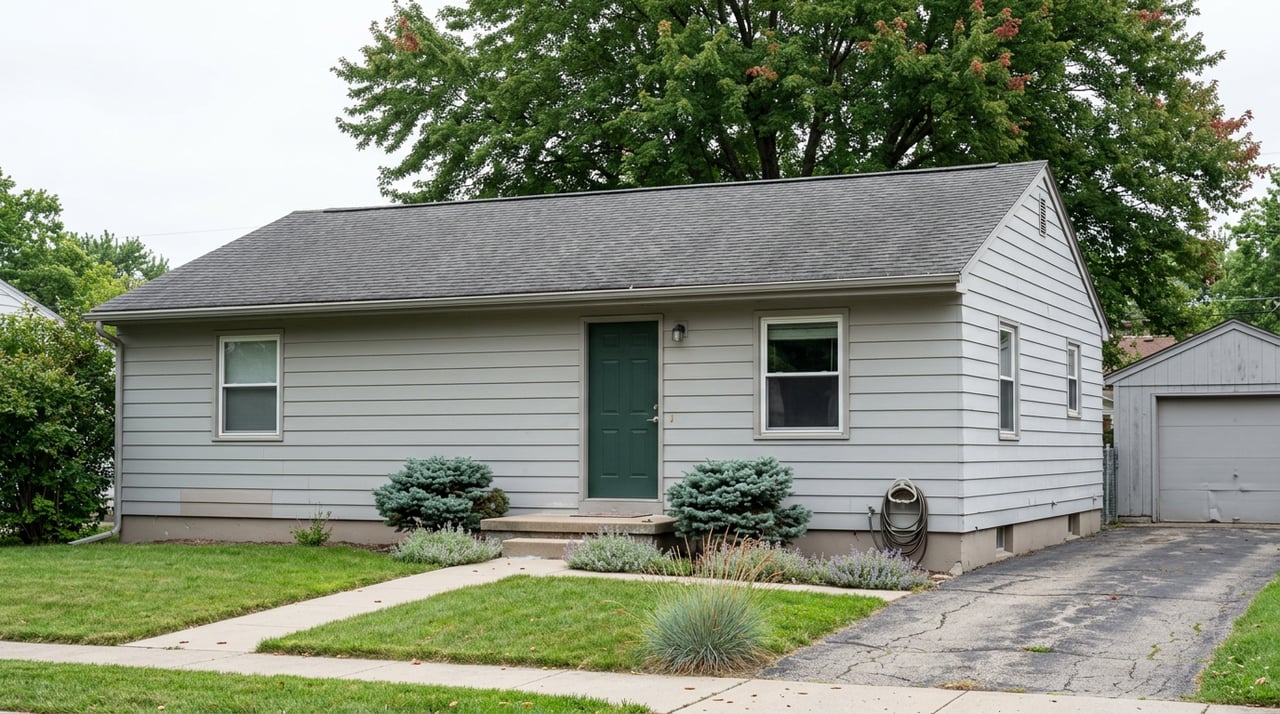
Under $200,000 typically means an in-town home, often a two- or three-bedroom bungalow or ranch on a city lot, sometimes with recent updates like new flooring or a newer roof, close to downtown businesses and Rambadt Memorial Park.
$200,000 to $400,000 starts to include larger square footage, rural settings on a few acres, and occasionally a historic property. One recent listing offered over 3,600 square feet across three finished levels, with original woodwork and millwork that's genuinely hard to find in newer construction.
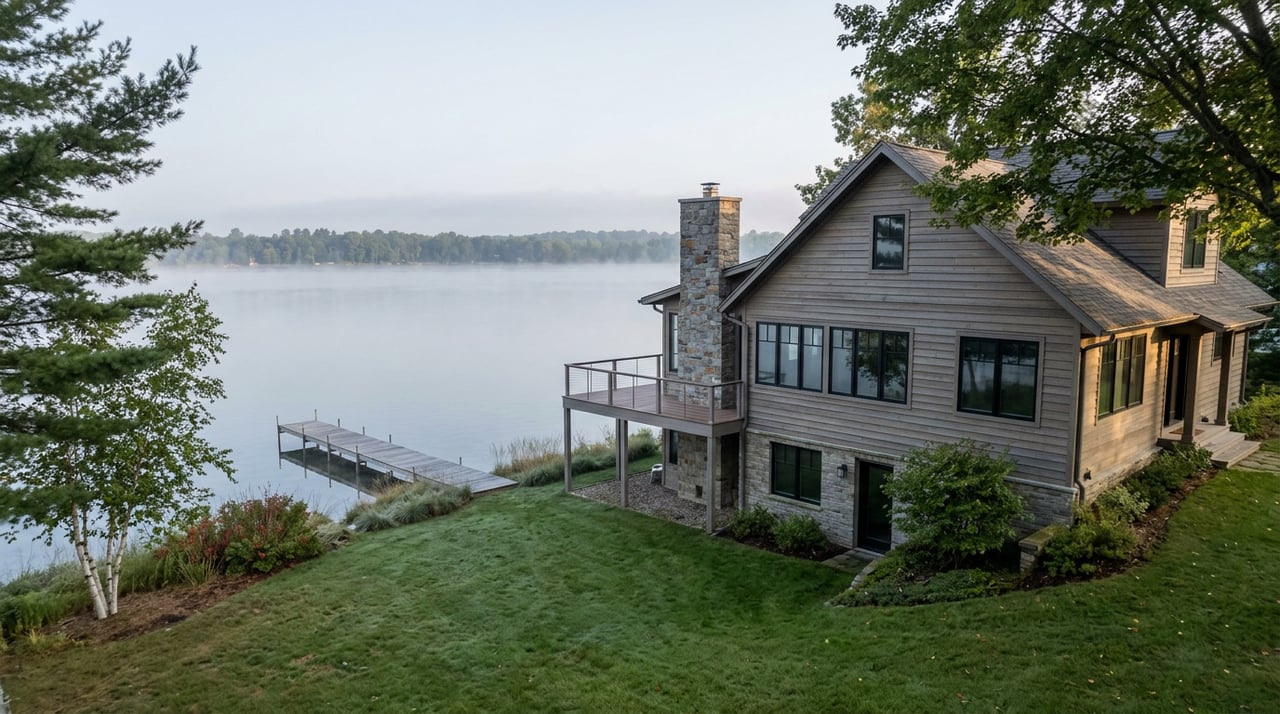
Waterfront and recreational property is its own category. Indian Lake listings have offered around 90 feet of private frontage on the all-sports lake, with access to the Indian Lake Association's roughly 318 acres of shared parks and trails. A private two-lake association nearby, built around Horseshoe and Round Lake, adds a clubhouse, swimming beach, and campground to the amenity list for buyers weighing a recreational purchase over a purely residential one.
Rural acreage and commercial parcels round out the mix. Wooded ten-acre parcels near Deer Lake Estates, riverfront acreage along the Hersey River, a known trout stream, and commercial land along US-131 near the US-10 exit zoned for uses like a hotel or restaurant all show up regularly in current listings, reflecting how much of Reed City's real estate story is about land and lifestyle, not just square footage.
Reed City Compared to Its Neighbors
For a family weighing Reed City against Big Rapids, the practical draw is often proximity without the price premium of a college town. Reed City sits within easy highway reach of Ferris State University and employers like the Spectrum Health campuses in both Big Rapids and Reed City, Big Rapids Components, and Yoplait, while carrying a smaller, quieter downtown built around the crossroads of the White Pine Trail and Pere Marquette Trail. For a retiree or second-home buyer comparing Reed City to Canadian Lakes, the difference is usually association amenities versus open-market variety. Canadian Lakes offers a built-in golf and lake community structure. Reed City offers more flexibility, from in-town starter homes to acreage to lake access through smaller, less formal associations, at a price range that a headline median can't fully capture either way.
A Few Questions Worth Asking
Should I wait for the median price to drop before buying in Reed City?
Given how much the reported median has swung within a single year, waiting for a specific number to appear on a portal isn't a reliable strategy. A steadier approach is watching days on market and price per square foot for the specific property type you want, since those measures have moved in a consistent direction through 2026 even while headline medians bounced.
Does a low median price mean the whole town is undervalued?
Not necessarily. A low median in one snapshot often reflects which specific homes closed that month, not a broad shift in value. A downtown bungalow, a lakefront cottage on Indian Lake, and a ten-acre wooded parcel are different products with different buyers, and blending them into one median obscures more than it reveals.
If you're comparing Reed City to other West Central Michigan towns and the online numbers don't seem to agree with each other, that's not a sign you're missing something. It's a sign the number itself isn't built to answer the question you're actually asking. A conversation about what a specific budget buys in a specific part of town, backed by someone who watches these listings close in real time, tends to clear things up faster than another portal search. Big Rapids Realty works Reed City, Big Rapids, Canadian Lakes, and the surrounding counties every day. Contact us when you're ready to talk through what your number actually means here.